
It’s official…a storehouse has opened up for me and my words
How I got my book deal


Last September, I sat on a packed plane and tried to steady my nerves. My flight had been delayed twice on my 962-mile trek from Birmingham, Alabama to New York. I would be arriving well past midnight and then have to prepare for a morning of meetings.
I was headed to NYC to pitch my book idea to the largest publisher in the world as part of their history-making effort to elevate Black voices. A part of me felt like I had no business thinking I was good enough or even worthy enough to be in the same room with these writers, editors, agents and decision makers. Another part of me felt like I was born for this very moment.
When I finally got into my discount hotel room, I began a feverish dance of cleaning, unpacking, and questioning. Should I wear the banana yellow dress or the blush one? Do I need a folder or a binder?
I finally settled into sleep around 3 a.m. and then awoke around five.
The next morning, I stepped outside — dressed in yellow — and looked up at the sky. I felt like a tiny chocolate drop among the buildings so tall they seemed to stretch into the clouds. I took a breath and braced myself to be among the rush of people walking with intention. I took in the sounds of car horns and chatter, inhaled the waft of warm breakfasts and hot garbage, and traveled along sidewalks dotted with white sheets topped with knock-off Gucci belts and fake Fendi bags for sale.
With each step, I went over an internal speech trying to convince myself that I belonged among them (the people, not the faux designer wares). I thought back to my first attempts at being a writer. As a 9-year-old, my stories had no Black boys or Brown girls in them. My tales mirrored the books I had access to in the city library. In those stories no one looked like me. Their skin was the color of porcelain and they went on journeys in places far away from my urban neighborhood. Did no one want to read about Shante or Pookie? Did anyone care about the expeditions of Southern kids riding ten speed bikes and eating green apple Now and Laters?
But when my elementary school teacher introduced me to Maya and Langston and Zora, the chains on my imagination were broken. I colored in my stories with brown faces and people who walked with a beat and spoke with a song.
And there I was in Manhattan, headed toward one of those sky-high buildings to see if the story of my Black grandmama could somehow be given wings.
I started off my walk wearing my comfy purple Sketchers and then the closer I got to my destination, I slipped into my favorite taupe pumps (that are so worn one of the heels is gnawed down to the nail). I tried to walk with confidence and pretend I didn’t hear the clacking of metal against the sidewalk.
As I approached the building I saw a cluster of women writers posing for a picture outside. They were headed to the same meeting and vying for the same chance as me. Among them was the sweet, dimple-cheeked Georgia peach I had met earlier that year. She embraced me into their fold and made me feel like I was one of the girls.
“Cheeeeese,” we sang in unison, and then took several selfies.
Together, we headed inside. I paused for a second to gather myself for the event. Would there be stiff industry folks who looked at me like I was a country bumpkin? Would they laugh at my phrases or scoff at my words?
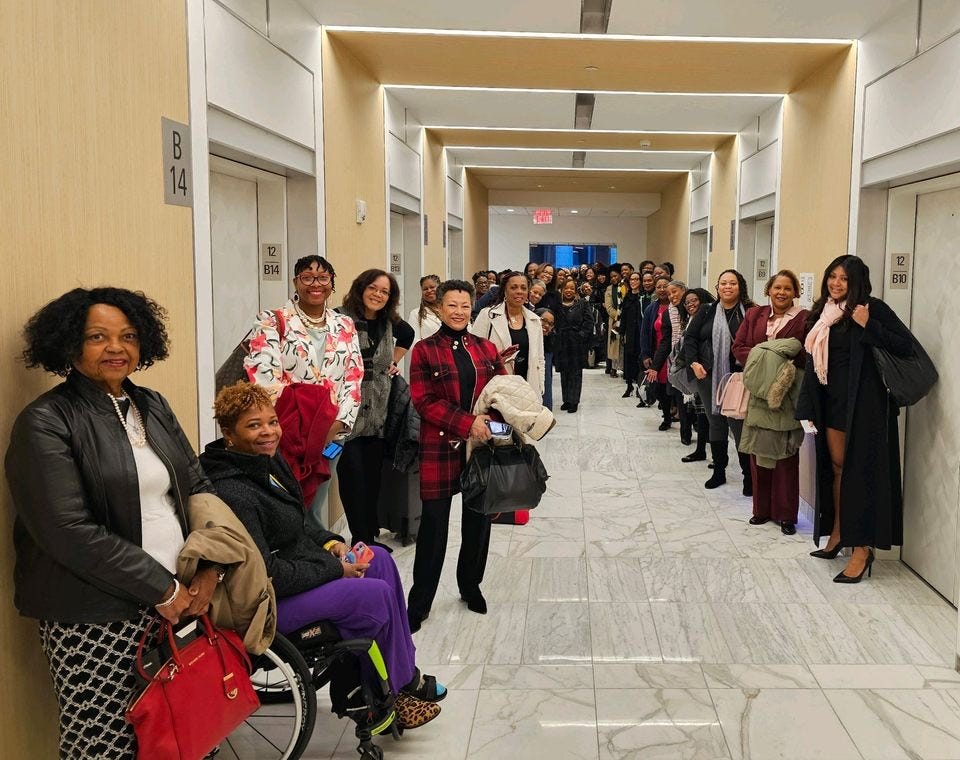
The elevator glided up several floors and then opened. What I saw took my breath away: a sea of Black women — smiling and strutting and dressed to impress. They wore bright red lipsticks and gold glosses. They sported candy-colored eyeglasses in funky asymmetrical shapes, rocked bountiful curls contorted into various styles, and donned everything from wrap dresses to African-themed garbs with body types from voluptuous to statuesque.
“Hey girl,” they greeted each other (and me, too). We were a sisterhood of women who did not know each other, but embraced because we were melanated-related. We were each other's hype men and cheerleaders.
“I love your dress,” a trio of women called out to me. (The yellow was a good choice.) I connected with women like me from my various tribes: Alabama girls, AKAs, HBCU grads, poets, and even breast cancer survivors. They had come from all over the country seeking a chance to be published.
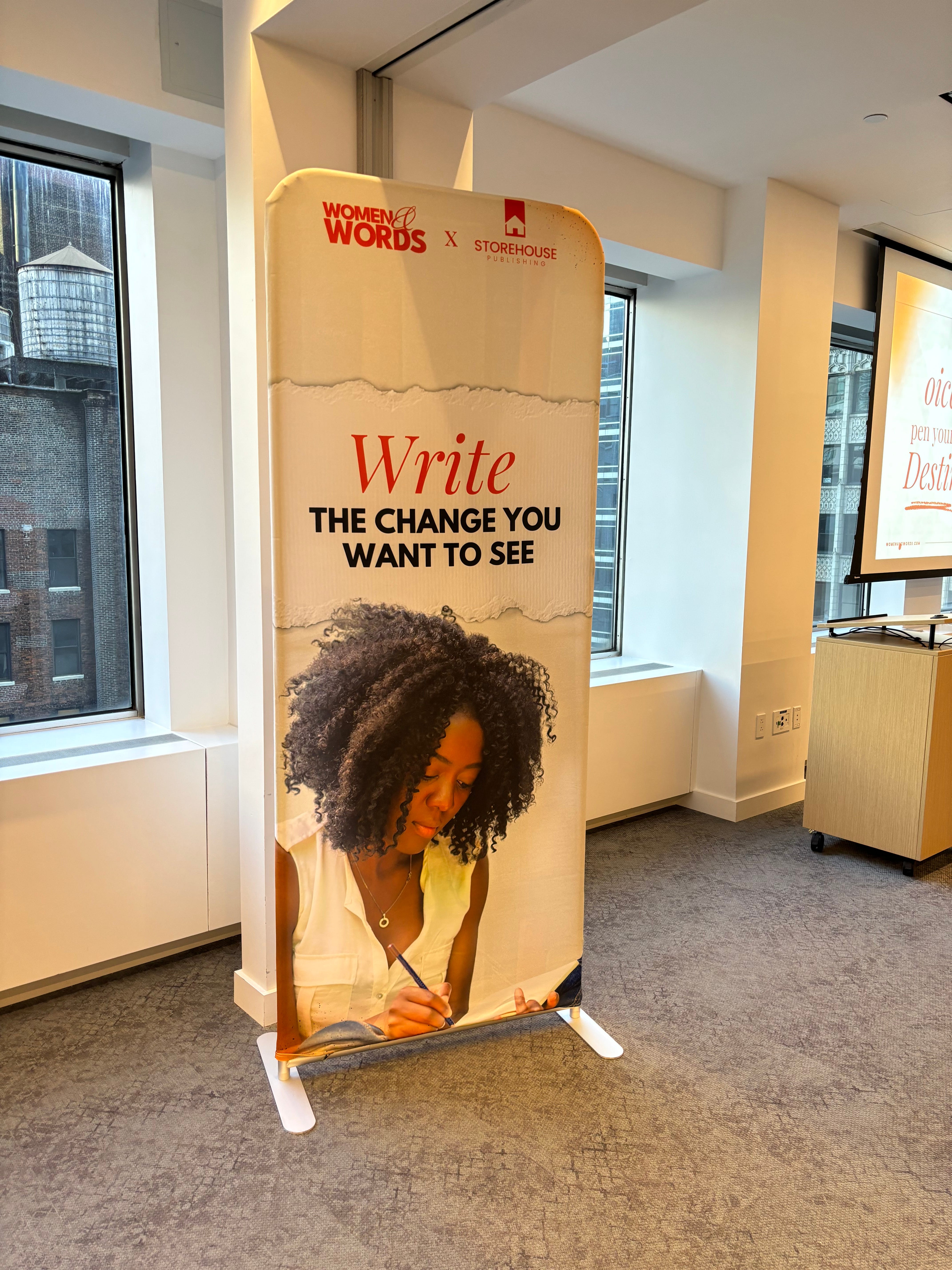
Penguin Random House executives greeted us with smiles and showered us with books and journals and a yummy lunch. They placed banners with affirmations throughout the room, touting:
The world needs your story.
Unleash your voice, Pen your destiny.
Write the change you want to see.
Write without fear.
I made my way to a corner to collect my thoughts before a series of speed dates with agents and editors. A young woman called my name on a microphone. I thought I had done something wrong, maybe sat in an inappropriate place or perhaps picked up someone else’s bagel.
“Follow me,” she said and led me outside a glass room. Inside I could see three people huddling. At closer glance, I saw that it was Tamira Chapman, CEO of Storehouse In A Box; David Drake, president of Crown Publishing Group; and Porscha Burke, Senior Editor-at-Large at Random House. I nearly fainted. I did not know I would be meeting with them. They had orchestrated this entire event and it was their vision to change the history of publishing.
Moments later, they beckoned for me to come inside. I sat down in the room, which was so small I wondered if they could smell my tea breath.
“OK, pitch,” I was told.
I nervously spoke about my grandmother — her heartbreaks and history making. I told them about my passion for writing and experience publishing essays and news articles. I fumbled a little and felt like I rattled on a bit long.
Tamira, a chocolate goddess with an Old Hollywood beauty and a face that rests into a smile, gleefully announced that they were offering me a book deal for a new imprint dedicated to telling the stories of Black writers. They had already read my proposal and chapters. They knew my grandmother’s name and her story and had the offer letter already typed out.
I covered my face to hide the flood of tears. I could barely speak. Tamira’s words had unlocked a dream I had since being that nine-year-old writer.
She lovingly embraced me while I tried not to get my Fashion Fair Brown Blaze makeup on her blouse.
David Drake, a tall, white-haired man who was dapperly dressed and tenderhearted, had tears in his eyes. Porscha Burke, who is meek, gorgeous and favors writer Jesmyn Ward, had praying hands at her lips. They all grabbed me in a bear hug and rejoiced with me and for me.
Me? The girl who initially could not even see Black people in her literary imagination.
Me. The woman who thought her words were inadequate.
Me! The writer who has always dreamed of being a storyteller.
I was selected to be among the inaugural roster of authors with Storehouse Voices, a brand new imprint with Crown Publishing, a Division of Penguin Random House.
The imprint’s name is so apropos. In the Bible, Malachi 3 speaks about bringing all the tithes into the storehouse so that others can be fed and cared for. For this amazing new publishing collective, our words will be gathered —like tithes — into their storehouse to be shared with readers everywhere. Our characters and voices will soon be put out into the world and with a message that “yes, we belong” and “yes, come join us.”
After an epic champagne toast with them on a hotel rooftop later that night, I headed back to Birmingham at the crack of dawn. I was filled with an unspeakable joy, a resolve to write like never before and a gratefulness for the literary storehouse that has opened up for me.

Even though I have already heard a version of this story, straight from your lips, reading these words filled me with such incredible joy, appreciation and excitement for you, Marie! You have ALWAYS been worthy, and now you know it FOR REAL FOR REAL! Please keep writing & sharing this journey as your book comes to life. Love you!
Your post made me cry. Congratulations! That 9-year-old little girl inside you is, I am sure, dancing with joy. Can’t wait to see your book on the shelves.